New Directions Radio
Shortwave radio is a great source of international news.
By the Mother Earth News editors
November/December 1979
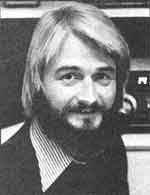
Copthorne Macdonald is the
inventor of slow-scan
television . . . a method of
amateur radio transmission
that allows ham operators
to both hear and see each
other during shortwave
broadcasts.
In much of the world-including many remote areas of our own continent-shortwave broadcasts provide a primary source of information. However, most North Americans are so saturated by the constant bombardment from local and national media that they totally ignore this international news source. And that's an unfortunate situation . . . because people need the variety of perspectives on world situations that such broadcasts can bring to them.
Wouldn't it have been interesting, for example, to have listened to the Voice of Iran during and after that nation's uprising against the Shah ... to have heard the guerrillas' description of the Nicaraguan revolution on Radio Sandino . . . or just to have gotten a different slant on this morning's news from Radio Moscow, Radio Sweden, or the BBC World Service?
Of course, serious shortwave tuning-listening for specific stations on specific frequencies at specific times-requires up-to-date information on what programs are available, and on the times and frequencies at which they can be heard . .. along with a sensitive, accurately calibrated receiver. Let's look first, then, at sources of program schedules.
WHAT'S HAPPENING WHEN
World Radio TV Handbook (WRTVH), the 544-page "bible" of international broadcasting, is published annually-in March-and contains a comprehensive country-by-country listing of stations ... along with the times, frequencies and languages of their broadcasts. The Handbook's editors have also indexed this important information in a number of other ways: They provide a separate list of English-language programs, for example, and a compilation of stations indexed by frequency. In addition, the book contains a time conversion table ... a list of shortwave hobbyist "DX clubs" . . . and a variety of useful maps. The current 33rd edition of WRTVH is available postpaid from Gilfer shortwave, Dept. TMEN, Box 239, Park Ridge, New Jersey 07656 for $14.95.
And-to find out which foreign programs are worth hunting for and listening to-you can check out the monthly Review of International Broadcasting, which publishes the opinions and criticisms of folks who listen to shortwave broadcasts, and presents both sides of controversial issues as well. The Review also contains articles of interest to shortwave fans, and four times a year-presents an up-to-date list of English-language programs that are beamed to North America. A subscription is $12 a year . . . write Glenn Hauser, Dept. TMEN, University Radio WUOT, Knoxville, Tennessee 37916.
NDR's own George Wood, (SM0IIN) who is Radio Sweden's "DX Editor", feels that the WRTVH and the Review of International Broadcasting together provide most of the information that listeners need. George also points out that many broadcasters will mail program guide at no charge-to listeners who request them, and that some stations have on-air programs dealing with the general subject of shortwave broadcasts.
George himself passes along all sorts of interesting hints during his "Sweden Calling DXers" program, which is aired each Tuesday at 1400 and 2300 GMT. (Current freqencies can be found in Radio Sweden's program guide, available on request from Radio Sweden, S-105 10, Stockholm, Sweden.) Wood suggests, for example, that when you find a program you like-you write to that station and get on its mailing list. That way, you'll stay up-to-date on all the time and frequency changes. George also points out that-as you listen to the various shortwave programs-you should gradually gather your own information. He uses file cards to keep the data straight. "I take a card and write down the time a program begins in the upper left corner," says the shortwave buff. "One line down I note the name of the station, and over at the right the various frequencies It's on ... with the stronger ones underlined. Then, all the cards are organized by time, so-at any hour-I can just take a look at my file and see who's on the air."
A SWEET LITTLE SET
Naturally, an adequate shortwave receiver is the other requirement for serious listening. Such a unit must have sufficient sensitivity and selectivity (that is, it must be able to detect weak signals and separate two stations on adjacent frequencies), and should also be calibrated to within 5 kHz or so of the frequency indicated on the dial . . . so you can find the station you're looking for. Finally, a really useful receiver must have a BFO (beat frequency oscillator), so you can listen to code and SSB voice transmissions in the ham bands, as well as to shortwave broadcasts. (Coverage from 3.9 to 22 MHz would be my suggested minimum.) Sadly, many of the less expensive shortwave portables-and most older ham receivers don't meet many of these requirements.
However, a year ago (in MOTHER N0. 54), I mentioned the Sony ICF-590OW receiver . . . and, since then, I've had rave comments from several MOTHER readers who went ahead and bought the units. Sid Parkin, who lives in a remote area of On. tario, wrote, "My wife and I are both enjoying the set. It works as well as-if not better than-you claimed it would." Fermo Albertini, who used his 5900W in the oil fields of Alaska's North Slope, called it "a marvel" and said, "My radio was the won. der of the crew . . . incredible!"
This amazing little set (priced at $150 in the U.S.) is less expensive than any other receiver that meets my "serious listening" requirements. It's small (8-3/4" wide by 9-1/4" high by 4" deep), lightweight (4-112 pounds), and operates on three "D" batteries or on AC. The receiver tunes from about 3.66 to 28.60 MHz (with the exception of 10.1 to 11.6 MHz), and is accurately calibrated between 3.86 and 28.39 MHz. (Also included are the regular AM and FM bands, and the set's FM sensitivity-like its shortwave sensitivity-is outstanding.) Although less selective than most "ham band only" receivers, the set's BFO-plus its broad frequency coverage and accurate calibration-make it a satisfactory "tool" for many ham uses, too. (The 5900W can be obtained through any Sony dealer.)
Of course-for the super-serious short. wave listener with lots of cash-there're plenty of more expensive receivers (many of which are listed in the free catalog available from Gilfer Shortwave) which have additional features. While it's possible to spend over $2,000 on a receiver, the 5900W owner can make a sensible next step-up by purchasing a Sony ICF.6700W. Priced at about $370 in the U.S., this set solves the calibration problem with a digital frequency readout, and has a narrow selectivity mode for improved SSB reception. (We'll soon see such digital readouts on less expensive receivers, as microelectronics prices continue to drop.)
In conclusion, let me express my main thought once again: Shortwave listening has always been practical for people living far from regular AM, FM, and TV stations . . . but it also makes sense for anyone trying to acquire a global perspective. Good listening!
Peace,
Cop Macdonald (VE1BFL)
P.O. Box 2941
Charlottetown
Prince Edward Island
Canada C1A8C5
New Directions Radio is an international network of radio amateurs concerned with those ways of using ham radio (and related modes of communicating) that promote our own growth as individuals, and which we perceive as helping to create a more aware, more caring, and more responsible human society. We encourage all who share these interests to work with us. A current schedule of on-the-air activities is included in each issue of the bi-monthly New Directions Roundtable Newsletter, published by Art Mourad (WB2POB) as a service to the rest of us. To subscribe, send 25a for each issue desired to Art Mourad, P.O. Box 787, Bergenfield, New Jersey 07621.
 |
|
|