Mother's Guide To Mid-Sized Chain Saws
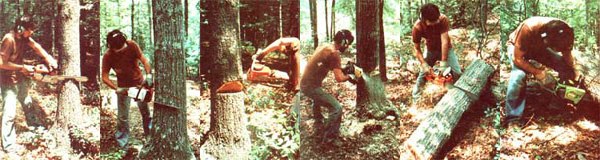
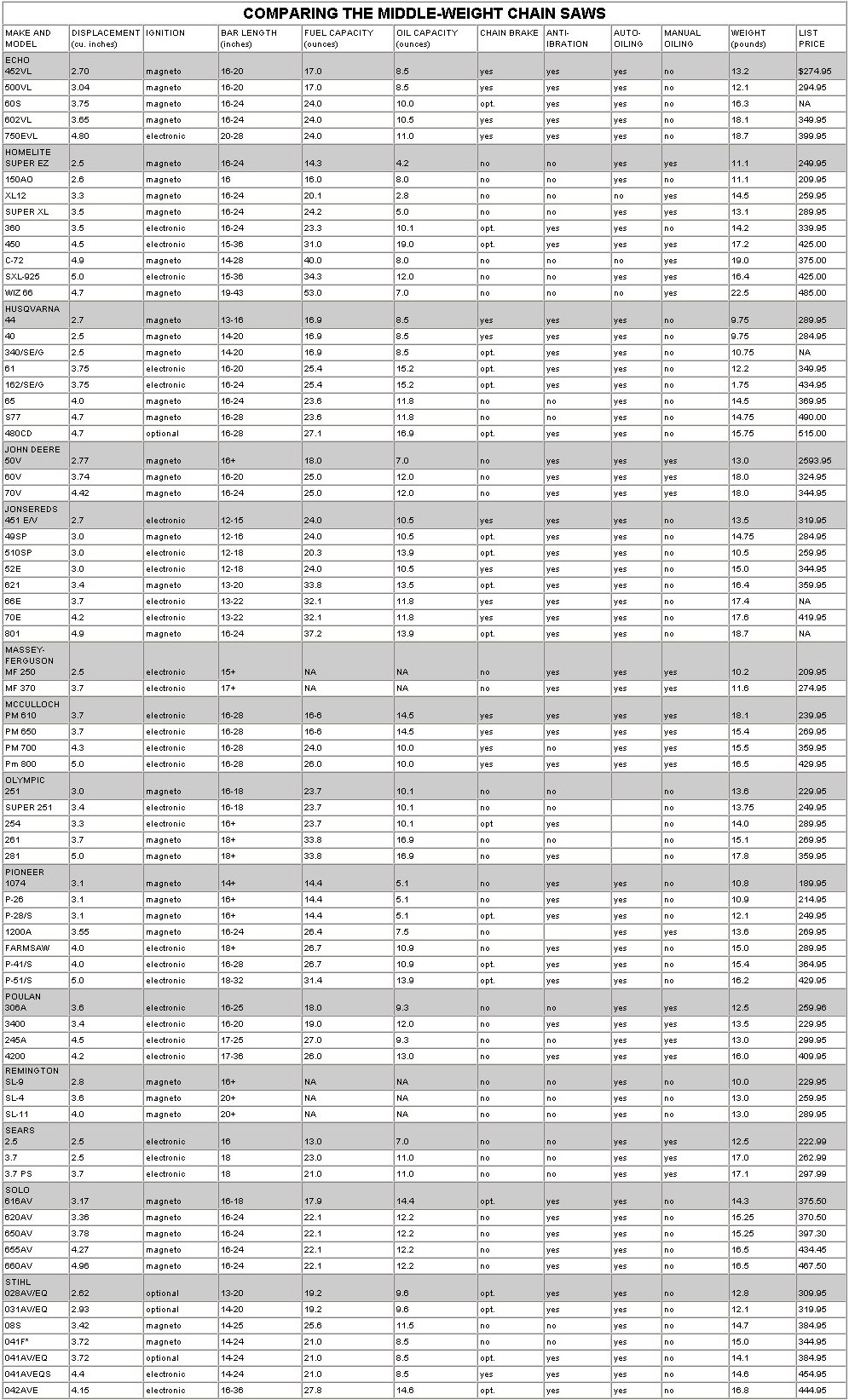
Comparison chart of middle-weight chain saws and a guide to felling a tree.
By the Mother Earth News editors
November/December 1979
More and more people-spurred on by the upward march of oil prices-are turning to wood as a source of heat. Fortunately, chain saw manufacturers have responded to the increased demand for their products-which has resulted from the new popularity of wood-burning with technically advanced and vastly expanded model lines of these powered wood-cutting tools.
In fact, there's been so much growth in the chain saw industry over the past five years that it would be impossible for us to include all brands and models in one article! Consequently, we've limited our survey to saws of the size range that MOTHER's readers are likely to find most valuable: those tools with engine displacements of between 2.5 and 5.0 cubic inches.
MOTHER feels that folks where heating their homes with wood-and probably cutting at least two cords of fuel each winter- shouldn't even consider buying a saw smaller than 2.5 cubic inches. The advantages of a medium displacement log slicer-to a person who actually heats much of his or her home with hand-cut wood- over-shadow the weight and dollar savings possible with a smaller saw.
In the first place, a substantial- sized cutter will drop trees more easily and quickly than a mini saw, and it will outlast one of the tiny timber choppers, too. Furthermore, because the more powerful tool does the job with less effort, it also puts less strain on its operator. In addition, many experienced log loppers feel that bigger chain saws are actually safer than are the smaller units, since additional horsepower reduces the possibility of the chain's bogging or jamming ... two frequent causes of kickback.
However, the number-on cause of chain saw accidents is fatigue, so don't pick a saw that's too heavy for you to handle (or work too long without a breather). A basic guideline for choosing a saw of appropriate heft is to buy no more than about one pound of machine for each ten pounds of your body weight ... but, of course, allow for your physical condition as well. Note, too, that some weights given in the accompanying chart are for the saw's power unit alone, while others include the bar and chain ... and many don't take into account the additional weight which will be added when the saw is filled with gasoline and oil. Moreover, the tool's balance-which will change with varying fuel levels-influences how the poundage actually feels when you're sawing wood.
Consequently, the best way to select a saw is to try out a variety of models first. Putting the blade to a log is the only way to know how the weight, balance, vibration, etc. of a particular tool will affect you. What's more, it's during such a trial process that you'll find out the most important thing you need to know before buying: the quality of the saw's dealer... and his or her ability to back up the product.