Emergency Electricity
Choose from the myriad selection of power generators to make ...
September/October 1979
If you depend upon electrical energy to run your house or farm, you can't afford to be caught by a power brownout or blackout. Though America's utilities supply us with an amazingly reliable source of current-with an average of only 24 hours of outage every 10 years, per family-power failures do (and will) happen.
It's true! You don't have to be completely dependent on those wires strung from the pole out front. For a pretty reasonable price-especially if you consider your potential losses-you can put yourself back "on line" with an emergency electrical supply. (Better yet, you canby simply opening the main jet-run on renewable alcohol fuel.)
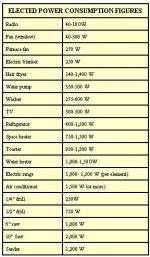
So just consult the following list that shows average electrical consumption for various tools and appliances, [2] add up the wattage of those you might want to supply, and [3] remembering that one kilowatt equals 1,000 watts, consult the output column in the accompanying specification chart (which, though not allinclusive, does contain a good sampling of the better units available) to choose a generator that suits your needs and budget.
 |
|
|