We Make Tree Syrup In The Ozarks Too!
By Tom Hodges
January/February 1979
PHOTOS BY TOM AND CAROLE HODGES
Folks who reside in the frozen North don't have a monopoly on homemade maple syrup. My wife and I live in Arkansas, and we've tapped our red maples (Acer rubrum) and sugar maples for the past few years. Of course, the short Ozark "sap season" usually limits our production to about a gallon of syrup a winter, but with the pure Vermont product priced as high as $7.50 a quart-we feel well paid for the pleasant time we spend in the woods.
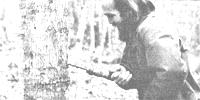
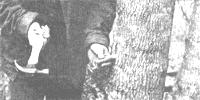
In early February (or whenever the weather is right) I bore a 1/4"diameter, 3"- to 4"-deep holeslanted upwardinto the south side of each of our nine trees. Hollowedout staghorn sumac (Rhus typhina) or elderberry (genus Sambucus) stemsabout six inches longare next hammered into the holes to serve as spigots. I then drive two nails into every treeslightly above and to both sides of each spigotand hang on a gallon jug. We empty the sap from these collectors into storage containers on a daily basis (a sudden freeze can break a filled glass jug). And, finally, we store the accumulated liquid in our root cellar (or in a cold spring), because sap can sour if it's left "out in the warm" and one spoiled bottle will ruin a whole batch of syrup.
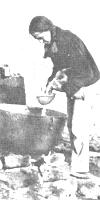
When the season is over, of course, is when the real fun begins. That's when my wife and I strain our collected nectar andtasting each container to be sure it hasn't souredboil it over an open fire in a 15-gallon iron kettle. After about eight hours of adding sap as the contents of the pot steam away (and stirring the liquid regularly), our approximately 30 gallons of "juice" is reduced to five or six quarts of concentrated sweetness. We then transfer this thin syrup to a pan on the kitchen stove, where we can stir it constantly (and better control the heat), to avoid scorching the product.
Taste and consistency tell us when the batch is done. After our syrup has cooled, we pour it into jars and store it in the 'fridge. (I left some of the tasty liquid outside once, and when I found it laterduring warm weatherthe syrup had become a rubbery mass.)
Our "sugarin' season" (which runs as short as nine days down here in the Ozarks) is officially closed when we remove all of the jugs, spigots, and nails from our trees ... wash the equipment in preparation for next year's harvest ... and treat ourselves to some homemade breakfast ambrosia.
SYRUP TECHNOLOGY
There is as you may have guessed while reading the accompanying articlesmore than one "correct" way to gather and cook tree sap.
Shallow tapholes (like Terry Domico uses) penetrate the sapwood of the tree and usually produce a light-colored, delicately flavored syrup. Tom Hodges' deeper holes, on the other hand, enter the heartwood ... and typically yield a darker, more strongly flavored product. In either case, remember that you'll need warm days and subfreezing nights to make your trees' sap rise and fall enough for you to "get your share".
Either boiling or lowheat steaming will convert collected sap to syrup, too ... although each method has its advantages and disadvantages. While lowheat evaporation is very time-consuming, sap at a full boll will require constant attention and stirring ... since hot syrup tends to bubble over without warning, and the sugary liquid is very flammable. (it's also more difficult to "stop" syrup at a precise consistency when it's rapidly boiled rather than slowly steamed down. "Proper" syrup should keep at least a year at room temperature ... Tom's batchthe one that turned rubbery-may have been slightly overcooked.)
Now that you know several ways to make yourself some syrup, just pick the methods that seem best for you. After all, once you've cooked up a gallon or two of your own sweetener you'll probably have developed some "pet" techniques of your own!
(Additional information about the production of maple syrup can be found in "How to Make and Market Maple Syrup", MOTHER NO. 14, pages 3442, and "Maple Syrup ... the Cool Way", MOTHER NO. 25, pages 4243. These back issues are available for $2.50 each-plus 95c postage and handling on each order-from THE Mother Earth News (restricted), P.O. Box 70, Hendersonville, North Carolina 28739.)